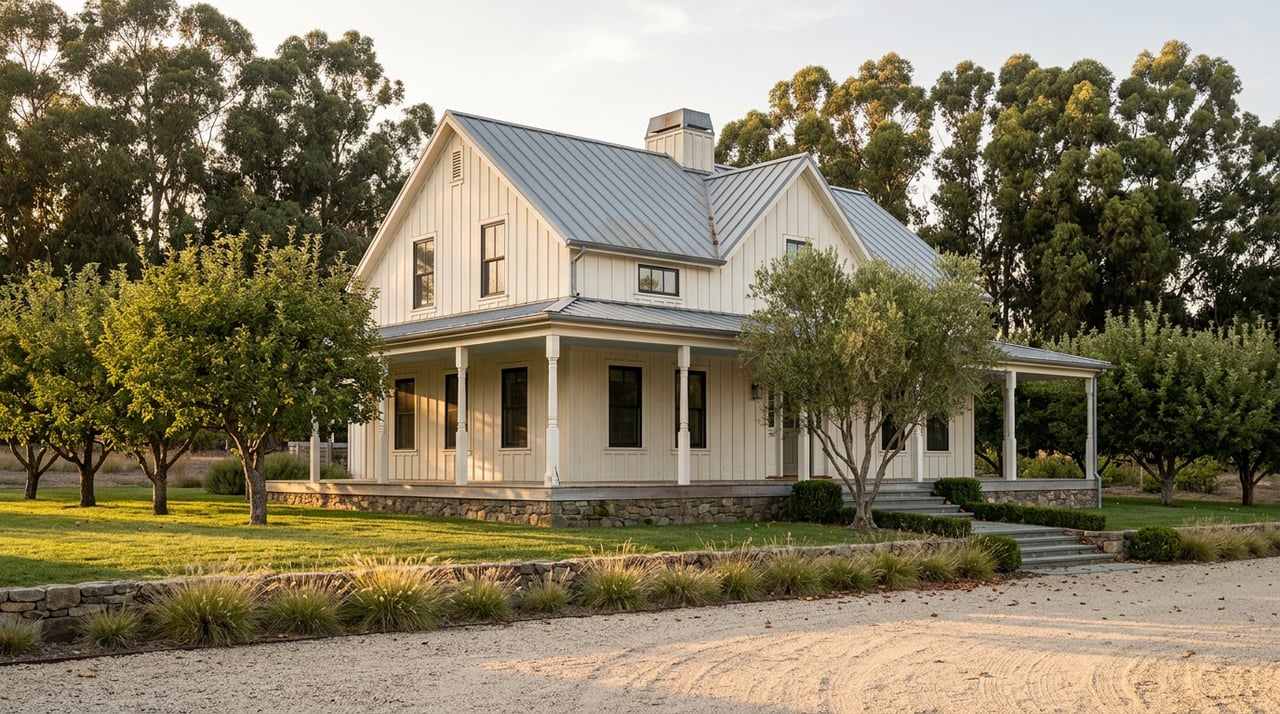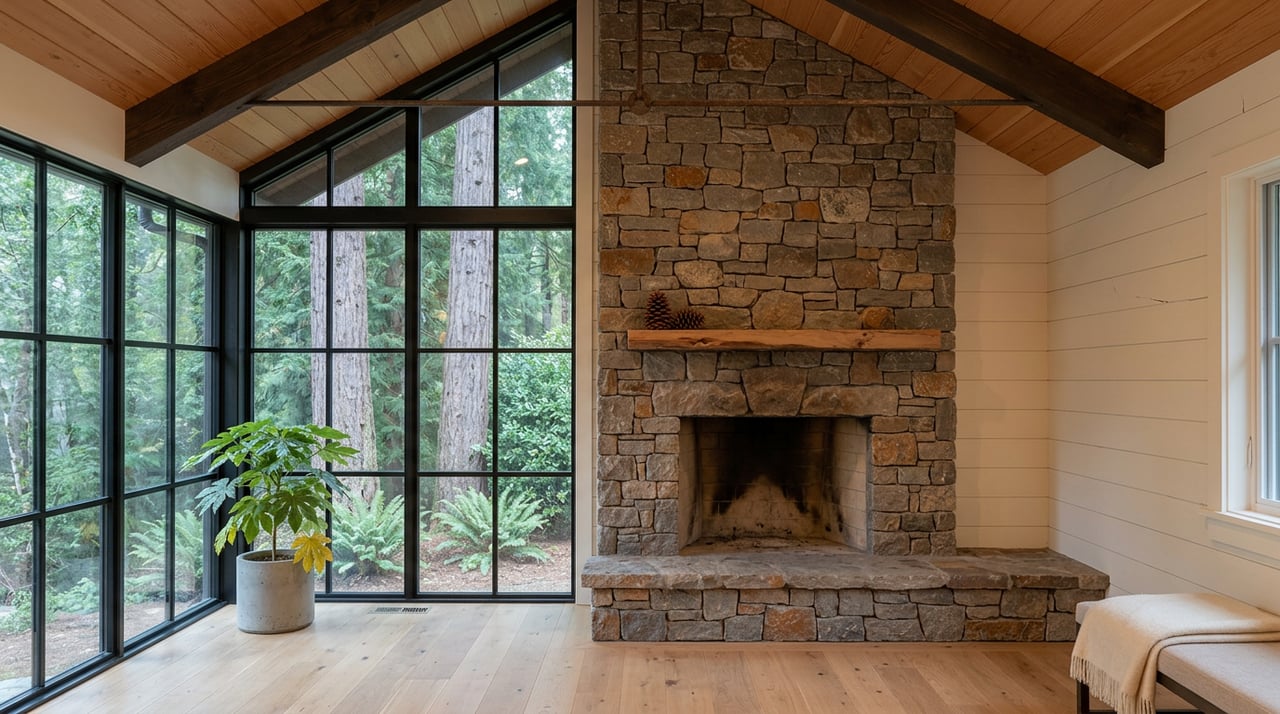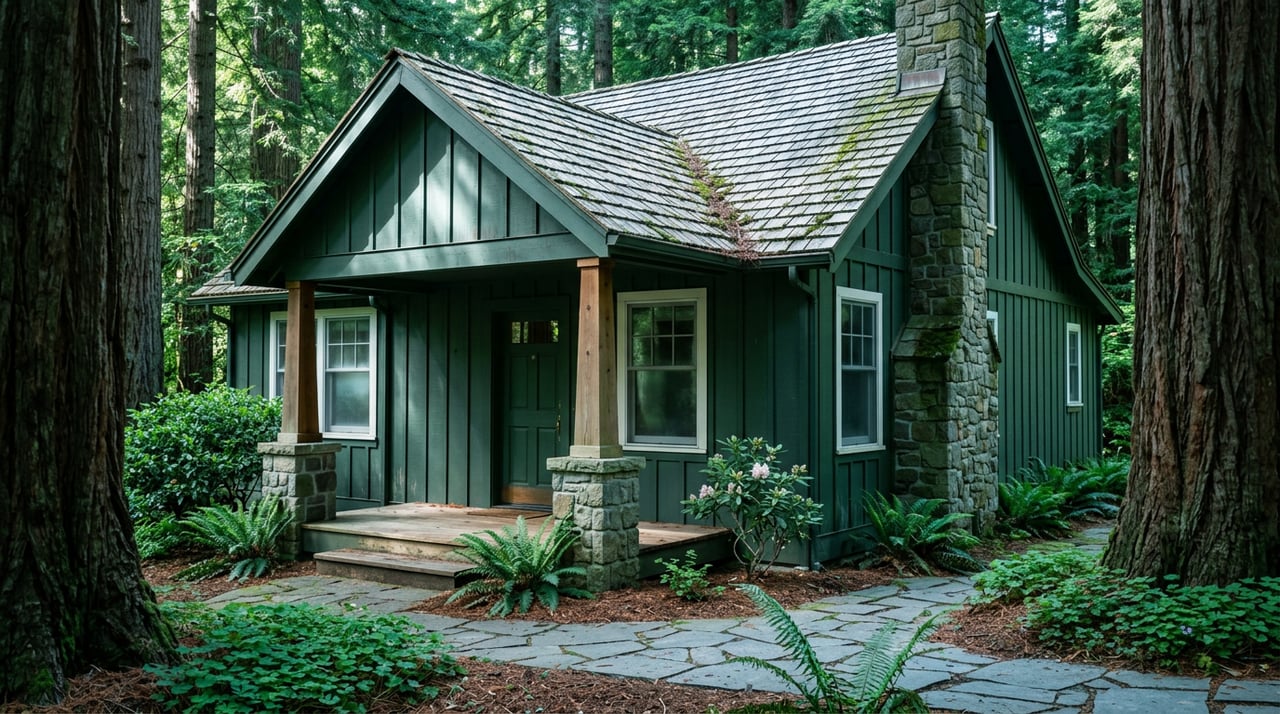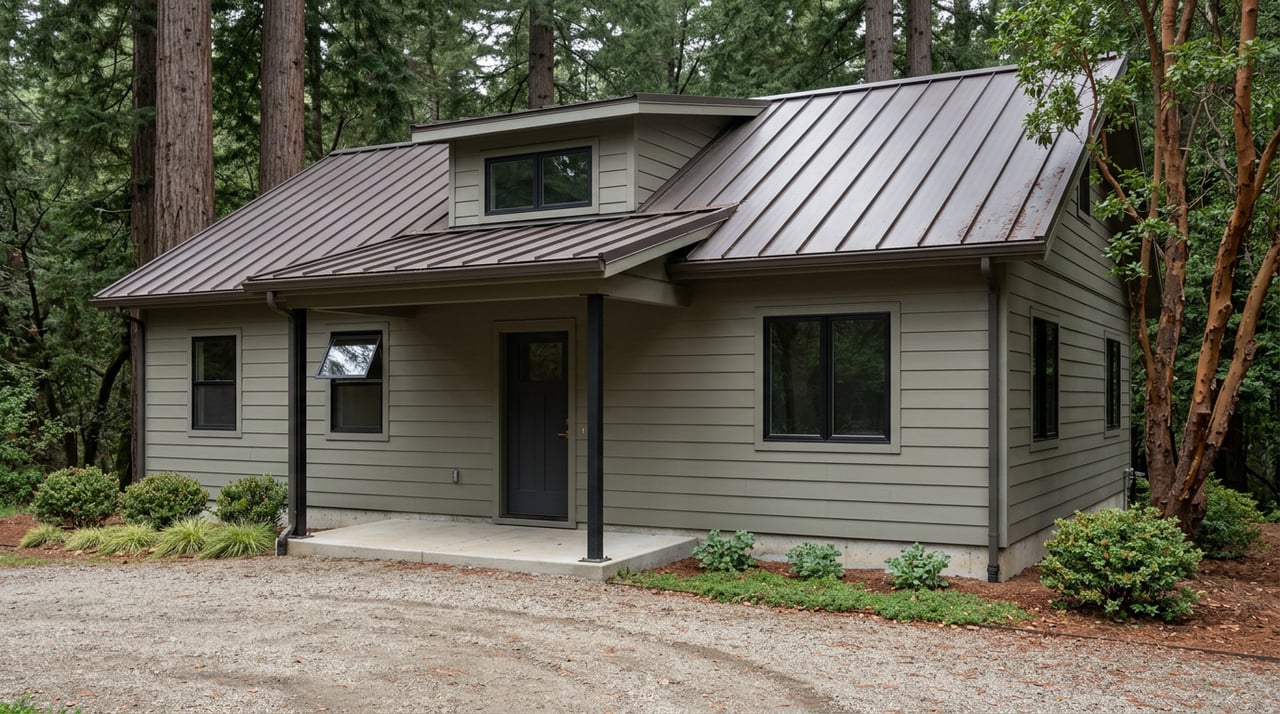
On July 29, Tonia Weakland stood in front of a crowd of volunteers, donors, and neighbors and did something she had waited six years to do: opened the front door of her own home. The 988-square-foot, two-bedroom house took sixteen months to build once the funding, materials, and permits finally lined up. Her original home burned in the CZU Lightning Complex Fire in August 2020, one of 697 single-family homes lost across Santa Cruz County that summer. As of this year, only about a third of those homes have been rebuilt, a figure confirmed by both the Santa Cruz County Grand Jury and recent local reporting on her rebuild.
Weakland's house is also a small case study in something a listing sheet won't tell you: the newest home on a fire-scarred street can be the easiest one to insure, while the untouched original next door can turn out to be the harder sell. That inversion, not the median price you'll find on a portal, is the number that should shape how you shop Boulder Creek right now.
The House That Burned Might Insure Better Than the One That Didn't
Most buyers assume a home that survived the fire is the safer purchase and a rebuild on a former burn lot is the riskier one. Insurance underwriting doesn't always agree.
When major carriers stopped writing new homeowners policies in California, existing customers kept their coverage, but new buyers didn't inherit it. A seller's decades-old, grandfathered policy dies at closing. Whatever premium the current owner enjoys, a buyer starts from zero, shopping the same thin pool of carriers as everyone else moving into a Very High Fire Hazard Severity Zone, a designation that now covers much of the Santa Cruz Mountains, including Boulder Creek.
That's where the rebuilds pull ahead. Since November 15, 2025, the California FAIR Plan, the state's insurer of last resort for high-risk properties, has offered Wildfire Hardening Discounts: up to twelve separate credits for measures like noncombustible fencing near the structure, cleared vegetation within five feet of the house, and outbuildings set back at least thirty feet. Dwelling Fire policyholders who qualify for all twelve can save up to 16.4% on the wildfire portion of their premium. A home built to current code, with ember-resistant vents and defensible space designed in from the start, is positioned to capture much of that discount. A cabin built decades earlier, however well kept, usually isn't.
The stakes here are not abstract. Last year, Lookout Santa Cruz reported on a Boulder Creek couple whose FAIR Plan premium on their rebuilt home was proposed to climb from around $2,000 to more than $21,000 annually, part of a broader rate increase averaging near 48% across their zip code. Regulators have since approved a statewide FAIR Plan rate increase taking effect in the second half of 2026, with wildfire-exposed areas like the San Lorenzo Valley seeing above-average adjustments. When premiums are rising across the board, a structure's ability to capture hardening discounts becomes one of the few variables a buyer can actually influence before writing an offer.
Ask your insurance agent, before you remove contingencies, whether the specific structure qualifies for hardening discounts and whether the seller's current policy is a legacy policy that won't transfer with the deed.
Three Different Markets, One Zip Code
Listings in Boulder Creek fall into three categories right now, and they don't compete with each other the way three houses in a typical suburb would.
Untouched original homes. Properties that never burned, often older cabins and mid-century houses under mature trees. These face the insurance shopping described above and sometimes carry higher replacement-cost estimates simply because construction costs have risen since they were built.
Cleared, entitled vacant lots. Parcels where a home burned and the owner completed some or all of the recovery permitting: geological hazard pre-clearance, septic and well status confirmed, sometimes even paid building permits and approved architectural plans. One Boulder Creek parcel currently on the market came with pre-clearance already done and the building permit paid, ready to build. Another, in the Forest Springs area, carries an active Temporary Housing Permit that lets a buyer live on-site in a trailer while construction proceeds. These lots trade on how much of the bureaucratic process is already finished, not just on acreage.
Completed rebuilds. New construction on former burn lots, built to current code, sometimes with hardening features designed in from the permit stage. These are the properties best positioned for the FAIR Plan discounts described above, even though they're also the newest, and often the smallest, homes on their street.
| Tier | What You're Actually Buying | First Question to Ask |
|---|---|---|
| Untouched original home | Established structure and landscaping, often older systems | Does the seller's current policy transfer, and what does a fresh quote actually cost? |
| Cleared, entitled vacant lot | Land plus however much of the recovery permitting is finished | How much of the geological clearance, septic, well, and permit work is done versus still owed to the county? |
| Completed rebuild | New construction to current code, often a smaller footprint | Does the structure qualify for FAIR Plan hardening discounts, and what's the quoted premium? |
A buyer comparing Boulder Creek to Felton or Ben Lomond needs to specify which of these three tiers they're pricing, because a single town-wide median blends all three into a number that describes none of them well.
The Same Town, Two Months Apart
Boulder Creek's median sale price depends heavily on which nine or thirteen homes happened to close escrow that month. Data for May 2026 put the town's median single-family sale price at $571,000, down 8.6% year over year, on nine closed sales. Two months later, in July 2026, the same zip code's median had jumped to $880,000, up 35.4% year over year, on thirteen closed sales.
Price per square foot moved in the opposite direction over that stretch: $622 in May, $523 in July. A higher total price paired with a lower rate per square foot points to a simple explanation. The July closings skewed toward larger homes, the May closings toward smaller ones. Neither number describes an underlying shift in value. Both describe which handful of houses happened to sell that month.
With months of inventory bouncing between roughly three and six depending on the snapshot, and total sale volume under $12 million in either period, Boulder Creek is thin enough that one rebuilt home closing can move the headline number by hundreds of thousands of dollars. Treat any single median quoted for this town as a snapshot of a few transactions, not a signal of where prices are heading.
The Water System Is Still Catching Up, Too
Insurance and permitting aren't the only recovery threads still being tied off. The San Lorenzo Valley Water District, which serves Boulder Creek, lost more than half its assessed water system structures in the fire and is still replacing fire-damaged tanks years later.
For a buyer, that means water service status is a parcel-specific question, not a town-wide assumption. Some properties sit on district mains that have been fully restored. Others, particularly in more remote pockets, still rely on wells or septic systems that predate the fire, or are waiting on infrastructure work that hasn't reached their road yet. Confirm service and any required inspections for the specific address you're considering, not the zip code as a whole.
What to Ask Before You Write an Offer
Whichever tier a property falls into, a few questions belong in every Boulder Creek offer:
- Get a bindable insurance quote, not an estimate, before you remove contingencies. A quote is the only number that reflects what you, specifically, will pay.
- If the seller carries a legacy policy from a carrier no longer writing new business in California, assume it won't transfer, and price your own coverage from scratch.
- For vacant lots, ask exactly which recovery permitting steps are complete: geological hazard clearance, septic and well certification, and whether building permits are paid or still pending.
- For completed rebuilds, ask whether the structure has been evaluated for FAIR Plan wildfire hardening discounts, and get that in writing rather than assuming it from the listing description.
- Confirm water service, well status, or septic condition for the specific parcel, not the neighborhood in general.
A Few Questions Worth Asking
Does a completed CZU rebuild still need further inspections? Most rebuilt homes have already cleared county inspections as part of the permitting process, but your own inspection should still confirm the specific hardening features, roofing assembly, and vent types that can factor into an insurance quote.
Can I still get standard homeowners insurance in Boulder Creek? Some current owners retain legacy policies from carriers no longer writing new business in the state, but a new buyer typically shops the same reduced pool everyone else does, often including the FAIR Plan alongside a separate policy for liability and non-fire damage.
Is a vacant, fire-cleared lot cheaper than buying an existing home? It depends entirely on how much recovery permitting has been completed. A lot with pre-clearance, septic, and paid permits already in hand carries a very different cost and timeline than bare land still waiting on a geological hazard study.
Let's Connect
Boulder Creek rewards buyers who ask sharper questions than the listing sheet answers. If you're weighing a completed rebuild, a cleared lot, or an untouched original against what else the San Lorenzo Valley has to offer, I can help you sort through the insurance quotes, the permitting history, and the fine print before you write an offer, not after.
Kathleen Manning works with buyers and sellers across Santa Cruz County and the Monterey Bay, including the mountain and country communities where due diligence looks different than it does on the coast. Let's Connect.